How to Ship an E-Bike: A Complete Guide

Shipping an e-bike isn’t quite the same as sending a normal bicycle. The extra weight, integrated electronics, and lithium battery all add complications that catch people out, especially if they’ve never done it before.
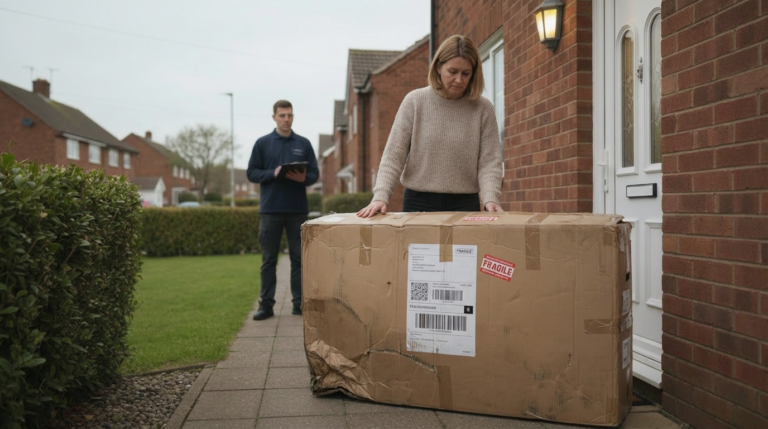
Over the years, I’ve moved a lot of bikes around the UK, both personally and professionally, and there are a few common mistakes that come up again and again. Damaged displays, bent derailleur hangers, loose batteries, and boxes that simply weren’t strong enough for the weight.
The good news is that shipping an e-bike safely is perfectly doable if you understand the options and take a bit of care with preparation. This guide covers everything you need to know, from packing to choosing the right courier, and also looks at the growing trend of no box bike delivery.
Why Shipping an E-Bike Is Different From a Normal Bike
The biggest difference is weight. Many modern e-bikes weigh between 20 kg and 30 kg, and some cargo or fat tyre models can be even heavier. That extra mass increases the risk of damage if the bike is dropped or mishandled.
The battery is another factor. Lithium-ion batteries are classed as hazardous goods for air transport, and although domestic road shipping is usually fine, some courier networks have restrictions. Integrated batteries can’t always be removed easily, which complicates things further.
Then there are delicate components. Displays, sensors, wiring looms and motor housings all need protecting properly. A bent derailleur hanger on a regular bike is annoying. On an e-bike with electronic integration, it can become expensive very quickly.
The Main Ways to Ship an E-Bike in the UK
There are three common methods people use.
Standard parcel couriers are usually the cheapest option if the bike is boxed. Companies like DX or specialist bike shipping services can work well, provided the packaging is strong enough.
Specialist bike couriers offer a more tailored service and often understand the risks better. This is a good middle ground between cost and peace of mind.
Dedicated bike transport services like Ebike Couriers move bikes fully assembled, without packaging. This is the safest option and is becoming increasingly popular, particularly for higher-value bikes.
Each method has its place depending on budget, bike value and urgency.
How to Pack an E-Bike for Shipping
If you’re sending a boxed bike, proper preparation makes all the difference.
Start by cleaning the bike. Dirt hides damage and can cause abrasion during transit.
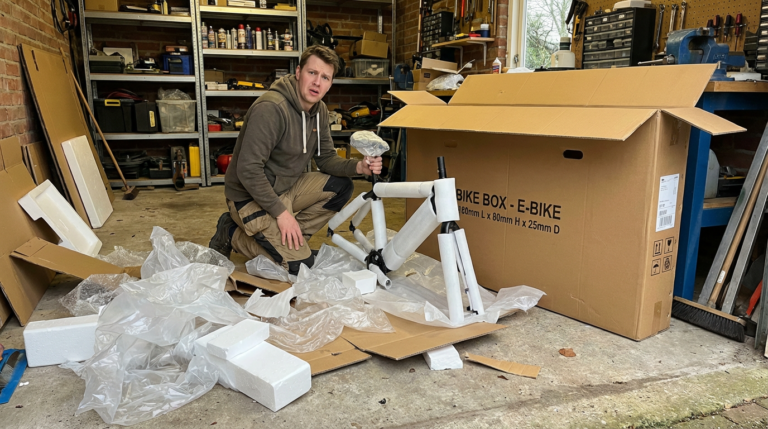
Remove the battery if possible. Wrap it separately in protective padding and place it securely inside the box. If the battery is integrated and non-removable, ensure the bike is powered off and protected well around the downtube.
Remove pedals, turn the handlebars sideways, and lower the saddle. On some bikes, you may also need to remove the front wheel.
Protect key areas with foam pipe lagging, bubble wrap or cardboard:
Frame tubes
Fork legs
Rear derailleur
Motor casing
Display and controls
Use axle spacers or cardboard inserts to prevent the fork or rear triangle from being crushed.
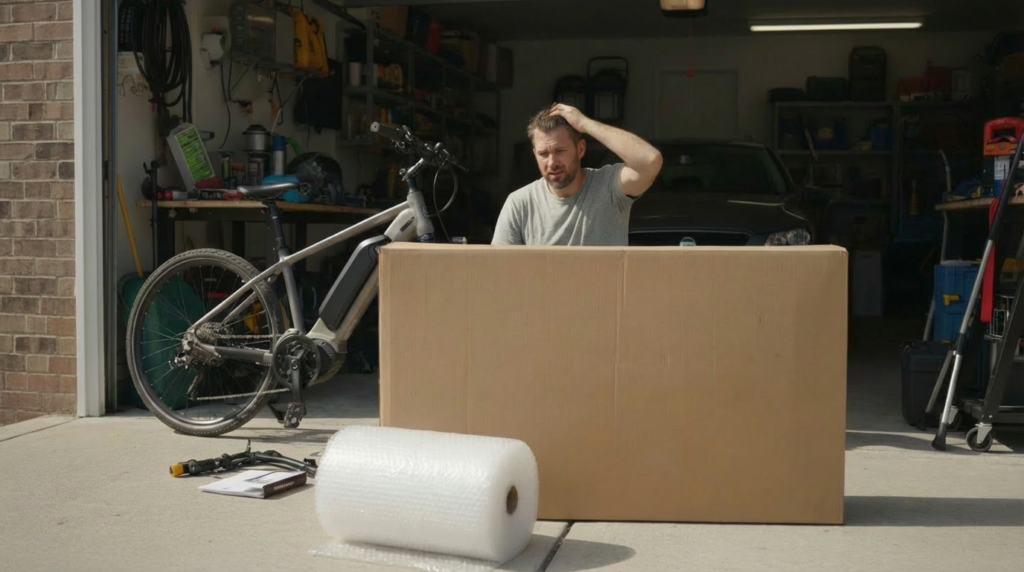
A proper bike box is essential. Original manufacturer boxes are ideal, but a quality double-wall cardboard bike box from a shop works well too. Avoid flimsy single-wall boxes, especially with heavier e-bikes.
Common Packing Mistakes That Cause Damage
Most damage happens because the bike can move inside the box.
Loose handlebars can swing and scratch frames. Unprotected derailleurs can bend. Wheels without spacers can compress the fork.
Another mistake is underestimating weight. Many couriers have 30 kg limits, and boxes can split if lifted incorrectly. Reinforcing seams with strong tape is always worth doing.
Finally, don’t forget insurance. Always declare the correct value of the bike.
Shipping an E-Bike Battery Safely
Lithium batteries sound scary, but for UK road transport, they are generally fine if packaged correctly.
If removable, wrap the battery in padding and prevent movement. Cover terminals if exposed.
Never ship a visibly damaged battery. If the casing is cracked or swollen, it should not be transported until assessed professionally.
For very high-value bikes, some people prefer to ship the battery separately via a specialist service, although this is rarely necessary within mainland UK.
No Box Bike Delivery: The New Alternative
A relatively new concept that’s gaining popularity is no box bike delivery.
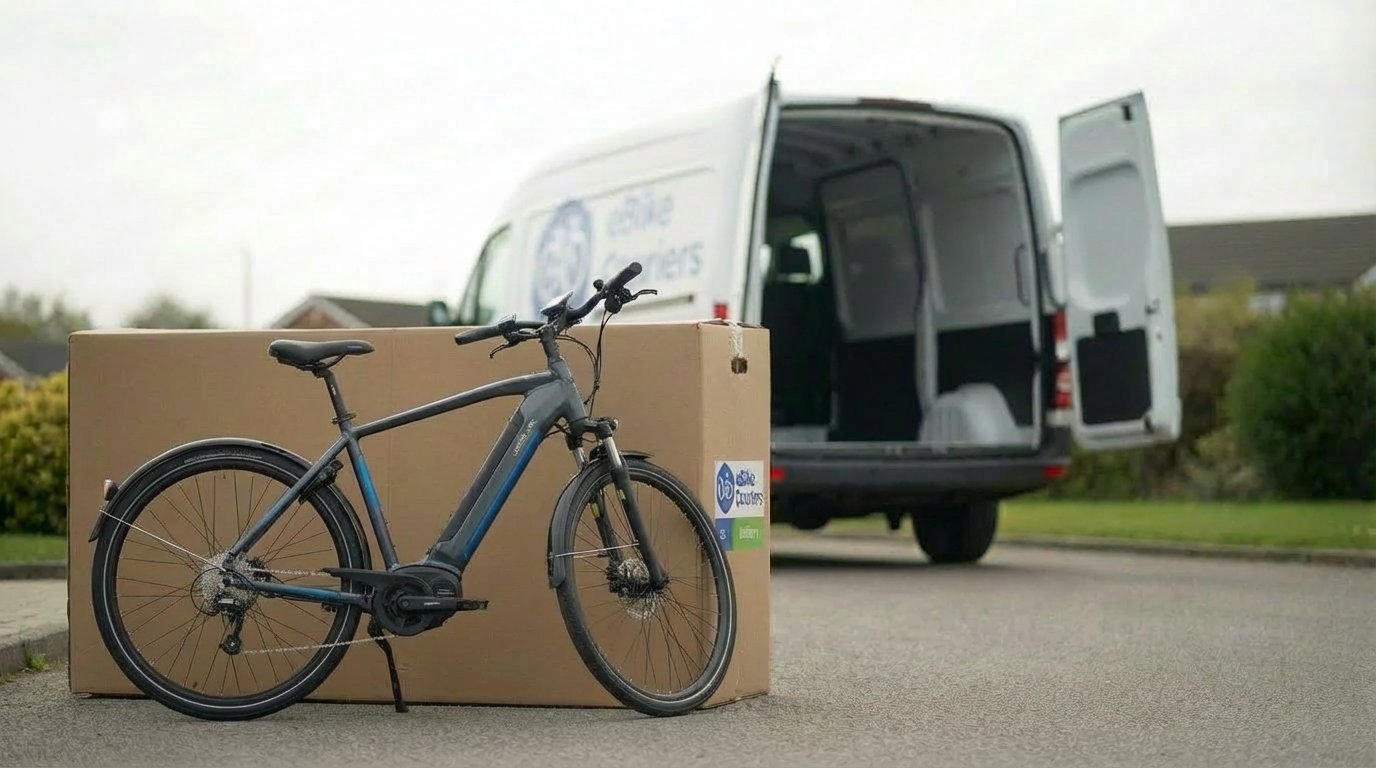
Instead of dismantling and packing the bike, it is transported fully assembled in a dedicated vehicle. The bike is secured using soft straps, protective covers, and specialist handling procedures.
There are several advantages.
There is virtually no risk of transit damage caused by poor packaging.
The bike arrives ready to ride.
There is no time spent dismantling or rebuilding.
It is ideal for heavier e-bikes and premium models.
For buyers purchasing bikes remotely, this can be a game-changer. Shops also benefit because they don’t need to box bikes, and customers receive them in perfect condition.
No box bike delivery is particularly useful for cargo bikes, step-through frames, and high-end e-MTBs, where packaging can be awkward.
When No Box Delivery Makes the Most Sense
If the bike is worth more than about £1500, many people decide the extra cost is worth the peace of mind.
It also makes sense if you’re not confident dismantling bikes, or if the recipient doesn’t have tools or experience to rebuild it.
For online marketplaces and private sales, it removes one of the biggest barriers to buying a bike remotely.
Choosing the Right Courier or Transport Service
When selecting a courier, experience with bikes matters more than price.
Look for companies that regularly handle bicycles or e-bikes. Ask about insurance cover, handling procedures, and delivery times.
For boxed shipments, confirm weight limits and compensation terms.
For no box transport, check how bikes are secured and whether the service is door-to-door.
Reading reviews helps, but practical experience and reputation within the cycling industry are often the best indicators.
How Much Does It Cost to Ship an E-Bike?
Costs vary depending on distance, service type, and bike size.
Boxed courier shipping in the UK often ranges between £40 and £100.
Specialist bike couriers may charge £60 to £150.
No box bike delivery typically ranges from £80 to £250 depending on distance and urgency, but for expensive bikes many people consider it worthwhile.
Remote areas such as the Scottish Highlands or islands may cost more.
Preparing an E-Bike for Collection Day
Before collection, check tyre pressure, ensure the battery is secure, and remove accessories that could fall off.
Take photos of the bike from multiple angles. This provides a condition record in case of any dispute.
Include contact details clearly on or inside the packaging.
For no box transport, simply ensure the bike is accessible and ready to move.
Final Thoughts
Shipping an e-bike isn’t complicated, but it does require a bit more thought than a normal bicycle. Weight, electronics and battery considerations mean preparation matters.
Boxed shipping works well if done properly and is usually the cheapest route. Specialist services offer more reassurance. No box bike delivery is the safest and easiest option, particularly for valuable bikes or anyone who wants a stress-free experience.
As e-bikes continue to grow in popularity, transport options are improving rapidly. What used to be difficult a few years ago is now straightforward, and in many cases surprisingly affordable.
If you take the time to choose the right method, your bike should arrive exactly as it left, ready for the next ride.